Plenix 2026.10.17 — A tighter ship
A full security review of the platform, from sign-in to the public API, and the fixes that came out of it. Saved links are checked before they open, calendar events belong to their organiser, and invoices raised from a company page or through the API reach your ledger like any other.
T
The Plenix Team·4 October 2026·3 min read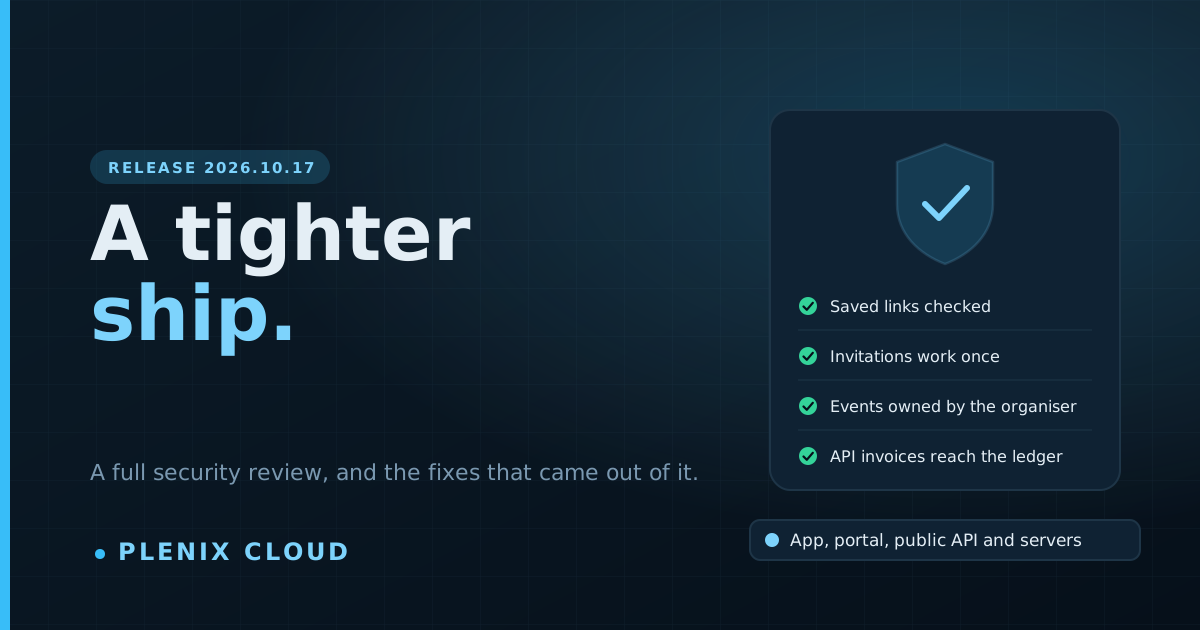
Release 2026.10.17 follows a top-to-bottom security review of Plenix: the app, the customer portal, the public API and the servers behind them. The review found nothing critical. This release closes the findings that could be fixed in code, and tidies up a few places where two parts of Plenix did the same job in slightly different ways.
Improvements
- Saved links are checked before they open. Website addresses kept on vault items, company credentials, tickets, projects, devices, meetings and chat messages only open when they are ordinary web, email or phone links. Addresses you already have keep working as before.
- Calendar events belong to their organiser. An event can be changed or deleted by the person who created it, or by an administrator. Events that came from an import or from another part of Plenix are unchanged.
- Ticket updates from the API keep their SLA. Changing a ticket's priority or status through the public API now recalculates its deadlines and pauses or resumes the clock, exactly as it does on screen.
- Proposals are accepted once. If a proposal is saved and accepted at the same moment, the follow-up work (stock, delivery, invoicing) starts once, not twice.
Changes
- Customers see issued documents only. Draft invoices and quotes stay out of the customer portal until you send them.
- Some addresses are reserved. New sign-ups can no longer choose a Plenix address such as login, support or billing. Existing addresses are not affected.
- Vault and credential links. A link saved on a vault item or a company credential must be a normal address. Bare host names and IP addresses are still fine.
Fixes
- Invoices raised from a company page or through the public API were handled separately from the Invoices page. They now use the same numbering, the same totals and the same ledger posting.
- Removing a risk, document, resource or timesheet from a project now checks that it belongs to that project.
- Editing or removing a contact, deal, lead or activity from a company page now checks that it belongs to that company.
- Marking an invoice as paid from a company page now records a payment, so the balance and the ledger agree.
Security
- Workflow record pickers respect your access. Choosing a record in a workflow only lists records from modules your plan includes and your role can read.
- Customer portal invitations work once. An invitation link can be used by one person, one time.
- Calendar invitation links stay private. The personal reply link in a calendar invitation is no longer shown to other people who can see the event.
- Stricter checks on incoming data. Every request is checked for malformed content before any part of Plenix reads it, and user accounts can only be given a recognised role.
- Remote access sessions have a firm limit on how much data a single reply from a managed device can carry.